Robotic Electronic Skin
Make Robots Feel
Solution introduction
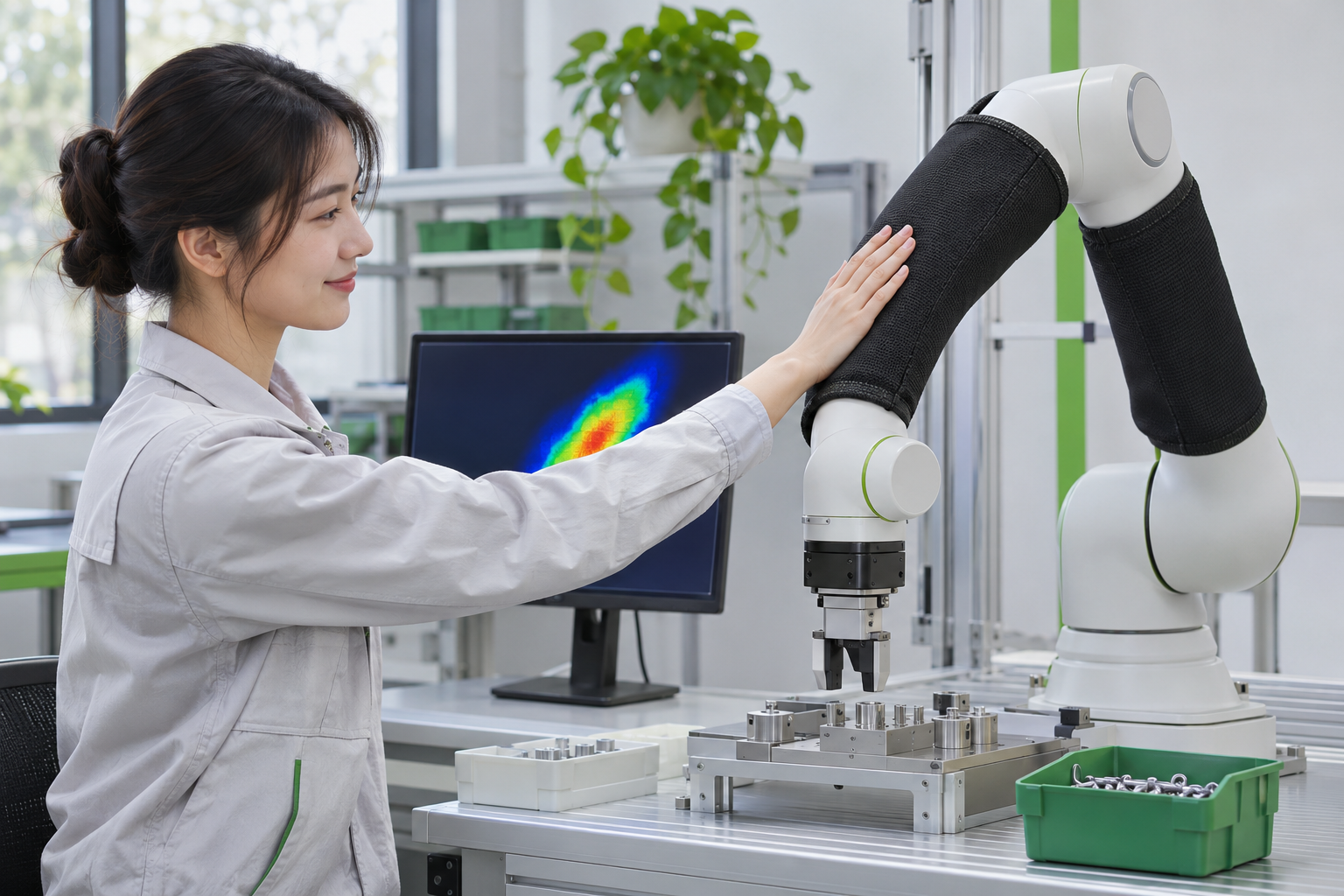
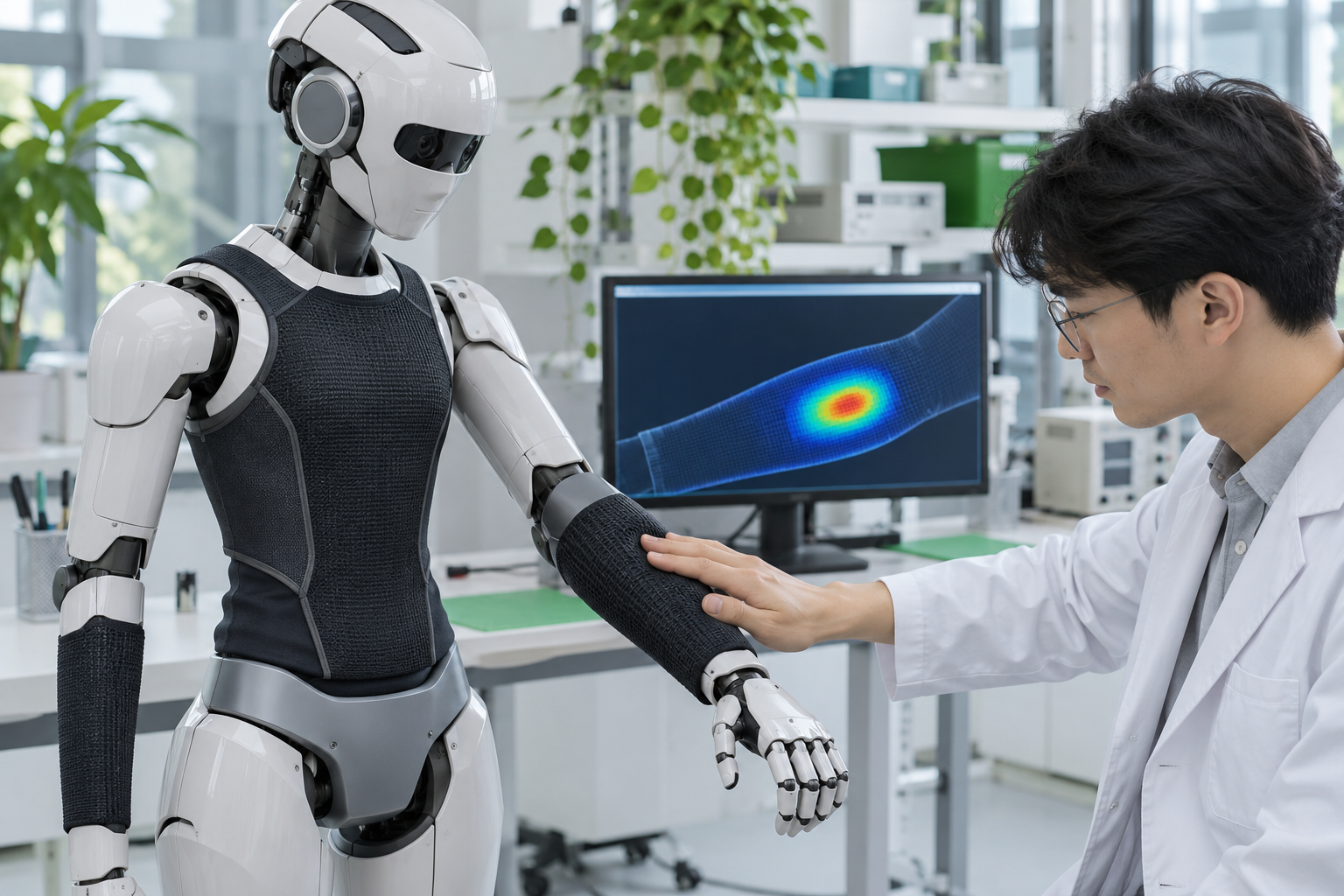
As the tactile sensing layer of the robot body, a flexible pressure sensing array is mounted on and wrapped around the robot’s torso, arms and other parts, covering large areas of the robot. It senses in real time the position, force, loaded area and slip of contacts received by the robot, endowing it with human-like whole-body tactile perception for safe interaction and precise force control.
Whole-Body Contact
Flexible pressure sensor arrays cover the robot’s torso, arms and other body regions to identify where contact occurs and how far it extends. Changes in regional pressure patterns distinguish localized touch from broader contact, providing data for interaction responses and contact protection strategies.
Contact location
Contact extent
Curved surface coverage
Pressure Measurement
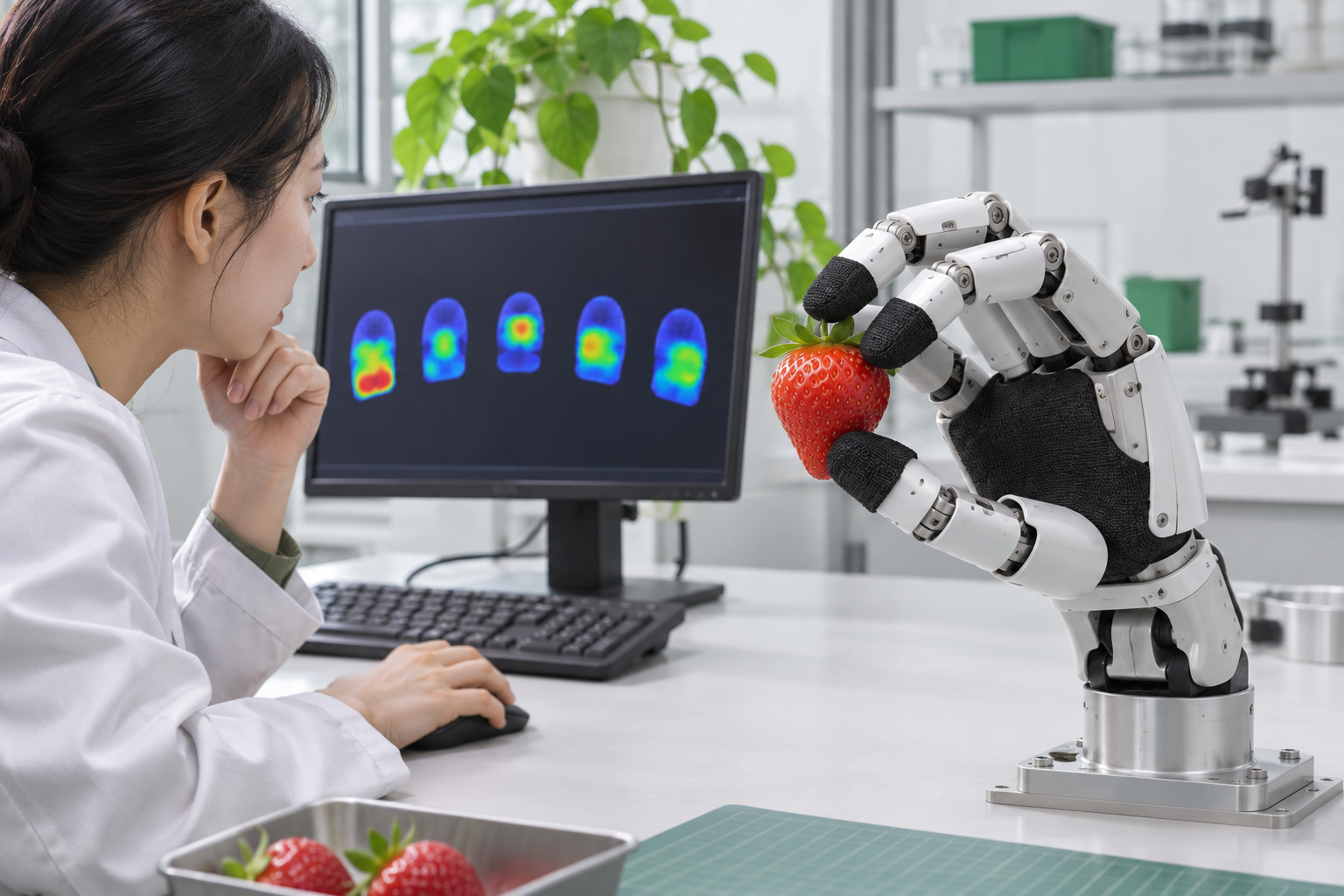
The array continuously measures contact pressure and its distribution, showing differences between contact regions and changes over time. These measurements provide feedback for grasping and contact control, helping the robot controller adjust applied force while balancing grip stability and object protection.
Pressure measurement
Load distribution
Force control feedback
Slip Detection
During grasping and handling, changes in the contact region and pressure over time help identify signs of object slip. The results can be passed to the robot controller to support grip force or contact pose adjustments, reducing the risk of slipping during delicate manipulation.
Slip detection
Dynamic feedback
Grasp stability
Core Value
The robot avoids collisions proactively for close human-robot collaboration.
The robot grasps fragile and soft objects without damage.
Provides tactile data for robot hardware and algorithm development.
Technical Advantages
Solution advantages
Flexible & Scalable
Conforms to the robot’s curved surfaces for whole-body deployment.
High Resolution
Dense points deliver finer perception.
Durable
Withstands repeated bending of robot joints for long-term stability.
Easy Integration
Wraps around the robot body across robot types.
Application Scenarios
Humanoid Robot Interaction
Flexible electronic skin on the robot’s torso and arms senses the location and pressure of human contact, providing tactile data for close-range interaction.
Collaborative Robot Protection
Surface contact monitoring in shared assembly and handling workstations provides input for contact recognition, loading feedback and collaborative protection strategies.
Dexterous Hand Grasp Control
Contact pressure and slip sensing during dexterous grasping provide feedback for force adjustment, helping balance grasp stability and protection of the handled object.
Smart Prosthetic Development
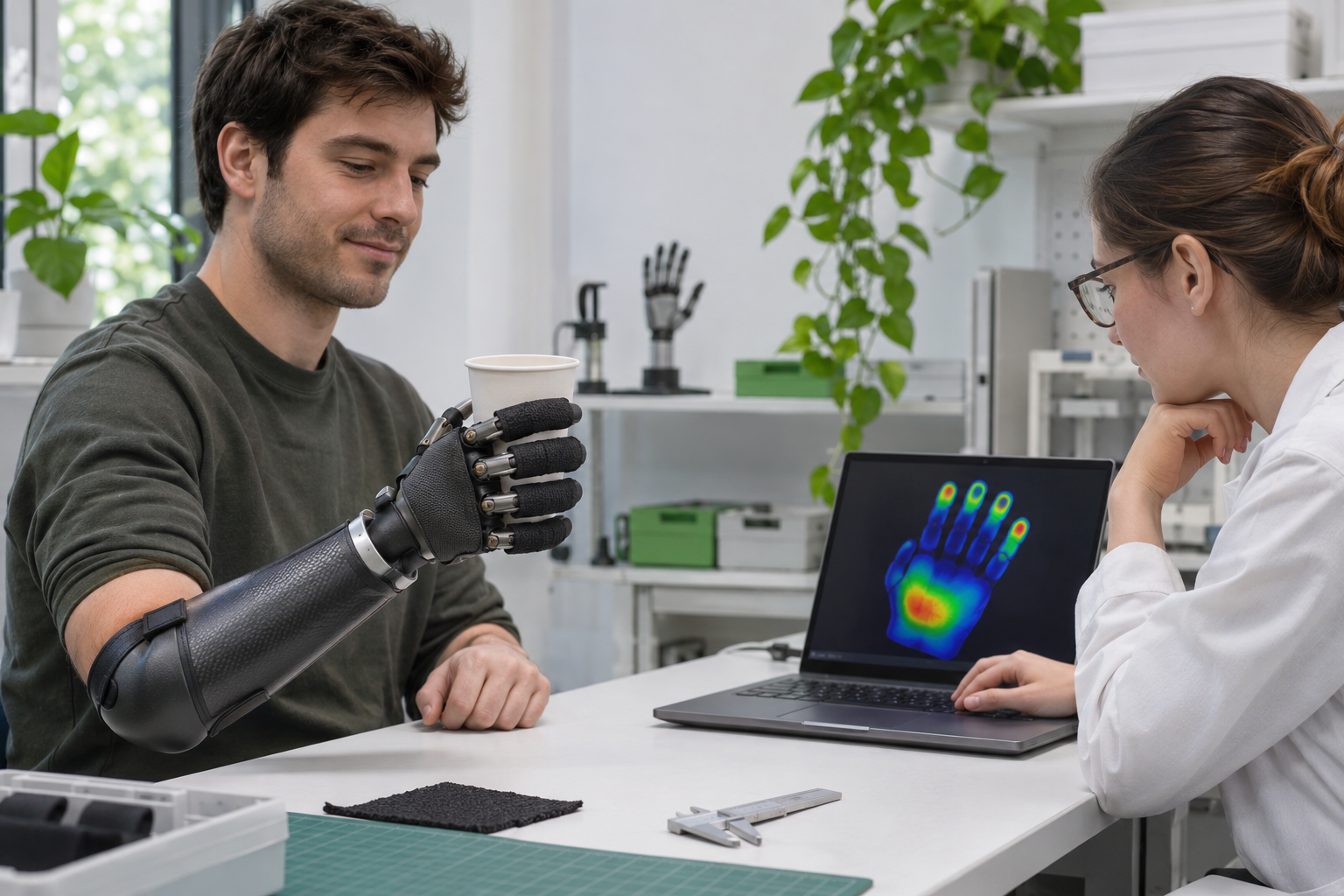
Flexible sensing layers on prosthetic contact surfaces capture tactile information during object handling, supporting the development of sensory feedback and control approaches.
Robot Tactile Research
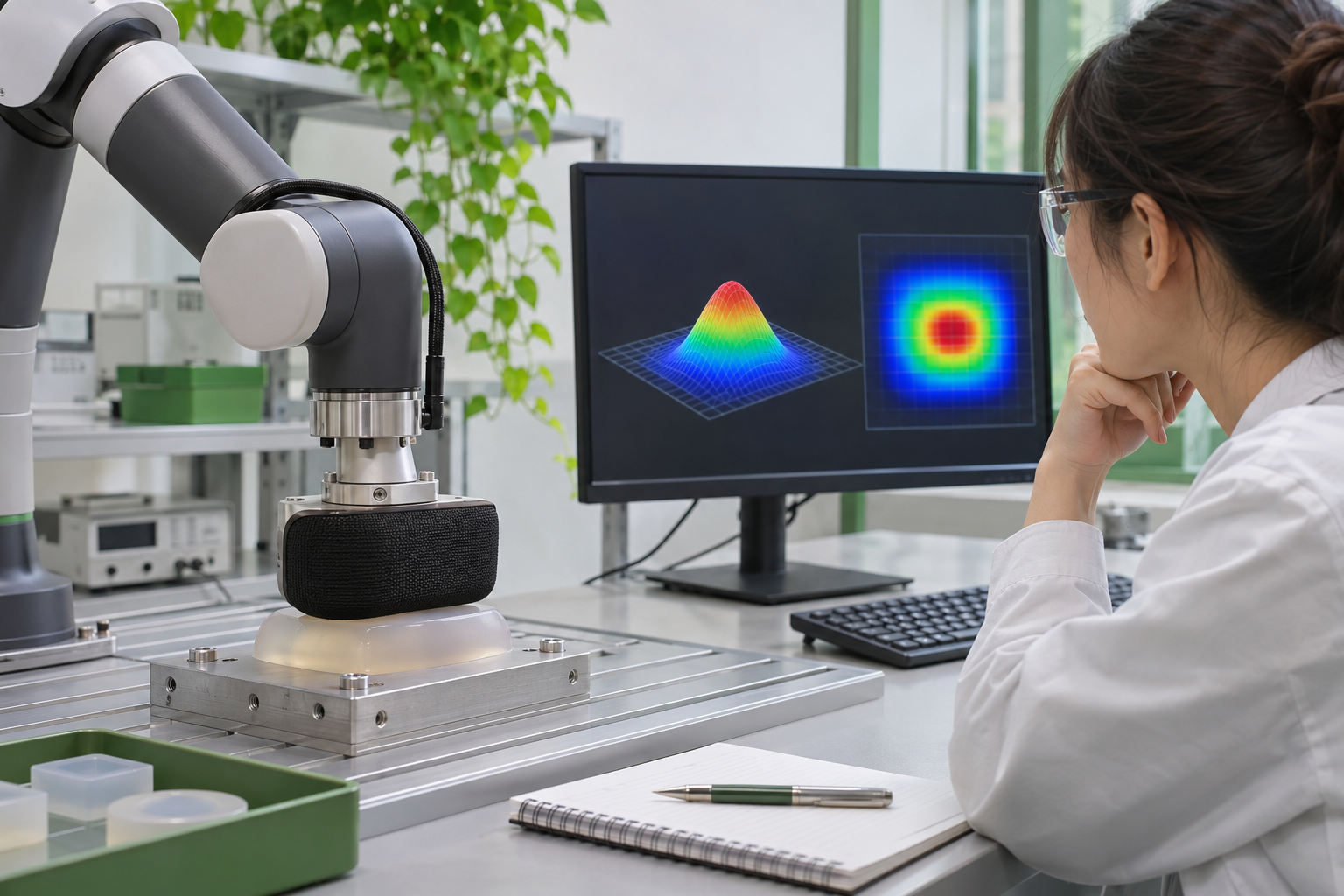
Pressure distributions and changes across robot contact tasks provide data for electronic skin placement, tactile perception algorithms and interaction strategy research.